
Abstract:
Raman spectroscopy, strumming the tunes of fine molecular vibrations, holds a crucial position to interpret covalent bonds, chemical compositions, metabolites, and other biomolecules in mixture by reading their vibrational fingerprint signatures. However, over the past decades, Raman encounters longstanding barriers in sensitivity, imaging speed, spatial resolution, limiting its territory extending to broader biochemical applications. Here, we introduce an all-round analytical workhorse, fiber-array Raman engine (termed FIRE). Without CCD based spectrometer, FIRE features a major advantage in non-repetitive single-shot spectra measurement at MHz repetition rate with full Raman span (-300-4300 cm-1) covering fingerprint, silent, C-H, and O-H regions, and therefore takes the major step to break the tradeoffs among sensitivity, speed, and spectral span. To improve the spatial resolution of chemical imaging, we developed VIS-SRS, and achieved lateral resolution of 110 nm in chemical mapping of mouse brain tissues. In molecular biology, we incorporated a small phenyl ring enhanced Raman tag (total of ∼0.55 kDa) with a single unnatural amino acid (UAA) to genetically label specific proteins. The engineered novel vibrational proteins (VPs) undergo much finer vibrational transitions and emit rather narrow vibrational spectra (0.1−0.3 nm). To apply coherent Raman in determination of brain tumour margin during surgery, we developed label-free and section-free histology, which allows clinicopathologic analysis based unprocessed fresh tissue in minutes. To enhance Raman in clinical applications, we further developed a large area CARS-LAMP imaging system with a FOV of 3.5 × 3.5 cm².
Biography:
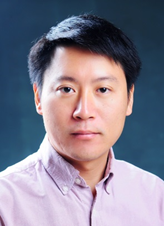
Professor Ping Wang received his B.Sc. from Department of Physics, Wuhan University in 2002 and Ph.D. from Wuhan Institute of Physics and Mathematics, Chinese Academy of Science in 2007. He began his postdoctoral research from 2008 at Purdue University. After he got the national award of “Chinese Youth 1000 Program” in 2015, he started independent research career as a professor at Wuhan National laboratory for Optoelectronics, Huazhong University of Science and Technology in China. In 2023, he moved to Beijing Changping National Laboratory as a leading scientist. His research mainly focused on chemical imaging of live organism and human diseased tissues by stimulated Raman scattering microscopy.