个人简介
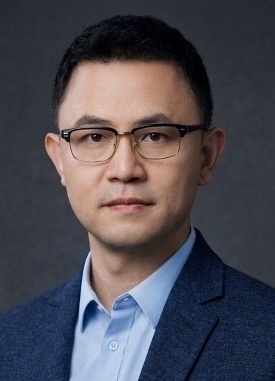
Dr. Lei Ma is a principal investigator at Peking University, working at the intersection of artificial intelligence, neuroscience, and computational biology. His research focuses on Digital Life, with the ambition to move from predicting biological phenomena to reconstructing the systems that generate them. By combining multimodal biological data, mechanistic modeling, and AI, his group develops executable and experimentally testable models of living systems, seeking to understand how biological functions and adaptive intelligence emerge across scales through brain–body–environment interactions.
His representative contributions include BAAIWorm, an integrative digital model of C. elegans linking neural circuits, body mechanics, and environmental interactions (Nature Computational Science, 2024, cover); the discovery of system-level time computation in the brain's circadian clock through large-scale neural imaging (Cell Research, 2024, cover); and a GPU-accelerated framework bridging biophysical neural simulation and AI (Nature Communications, 2023). His broader research spans digital organs, dendritic computation, biomedical imaging AI, and physics-informed generative models, connecting biological understanding with new approaches to artificial intelligence.
Dr. Ma has published or had accepted over 100 research papers, including 55 as first or corresponding author. He leads Platform IV of China's National Multimodal Trans-scale Biomedical Imaging Facility and contributes to the Peking University-led Panoramic Digital Life International Big-Science Program (VITAL). His research has been supported by national and municipal research grants, as well as the BAAI Scholar, Berggruen Fellow, Bayer Investigator, and Baidu Scholar programs.
Before joining Peking University, Dr. Ma worked at Autodesk on core simulation technologies for industrial software. In 2019, he helped establish the Life Simulation Research Center at the Beijing Academy of Artificial Intelligence (BAAI).
所授课程
Introduction to Digital Life
Medical Big Data and Artificial Intelligence
主持研究生课程
Biomedical Data Visualization
承担项目
2025–Present — Beijing Non-Consensus Innovation Program (First Cohort), Principal Investigator
2024–Present — Beijing Outstanding Youth Science Fund, Principal Investigator
2023–Present — Beijing Municipal Science and Technology Program, Principal Investigator
2022–2025 — National Artificial Intelligence Major Science and Technology Project, Principal Investigator
代表性论文
Selected Publications
An integrative data-driven model simulating C. elegans brain, body and environment interactions.
M. Zhao#, N. Wang#, et al., L. Ma*, T. Huang.
Nature Computational Science, 4: 978–990, 2024. (Cover)System-level time computation and representation in the suprachiasmatic nucleus revealed by large-scale calcium imaging and machine learning.
Z. Wang, J. Yu, et al., L. Ma*, W. Hu*, H. Cheng*.
Cell Research, 34: 493–503, 2024. (Cover)A GPU-based computational framework that bridges neuron simulation and artificial intelligence.
Y. Zhang#, G. He#, L. Ma#, et al.
Nature Communications, 14: 5798, 2023.An initiative on digital nephrology: the Kidney Imageomics Project.
F. Zhou, et al., B. Dong*, L. Ma*, L. Yang*.
National Science Review, 12(3), 2025.Dendritic nonlinearities mitigate communication costs.
X. Wu#, P. Zhao#, Z. Yu#, L. Ma#, et al.
Patterns, 7(6): 101520, 2026.Accelerating High-Fidelity Airfoil Design via Physics-Informed Video Diffusion Model.
Y. Ai#, Y. Guo#, et al., C. W. Lim*, L. Ma*.
Advanced Science, 2026.Learn to Enhance Sparse Spike Streams.
L. Hu, Y. Guo, et al., L. Ma*, T. Huang.
IEEE Transactions on Pattern Analysis and Machine Intelligence, 48(5): 5992–6007, 2026.3D Gaussian Splatting from Unposed Spike Stream.
Y. Guo, T. Hu, L. Hu, L. Ma*, T. Huang.
CVPR, 2026.Embedded prompt tuning: Towards enhanced calibration of pretrained models for medical images.
W. Zu#, S. Xie#, Q. Zhao#, G. Li, L. Ma*.
Medical Image Analysis, 97: 103258, 2024.
Full publication list: https://maleilab.cn/publications.html